


HE NEVER MADE IT TO DAWN: HOW FOOD POISONING IS QUIETLY THREATENING FAMILIES IN NIGERIA

The tragic death of a father of four highlights Nigeria’s growing food safety challenge and the hidden dangers of foodborne diseases.
Food safety is one of the most overlooked public health challenges affecting families in Nigeria and around the world.
From home kitchens to roadside food vendors, contaminated food and unsafe water practices continue to expose millions to preventable illness and death.
Hence, this 5-part series on food poisoning in Nigeria, by Reporter Oluwaseyi Elizabeth Jimoh explores the human stories, scientific causes, and practical solutions behind foodborne diseases—through interviews, lived experiences, and global health data.
WORLD FOOD SAFETY DAY: SPECIAL REPORT (PART 1)
For Mr. Bayo Adeayo (pseudonym), a father of four from Ondo West, it was supposed to be another ordinary night.
Instead, it became his last. As darkness settled and his family prepared for sleep, he complained of stomach pain.
Like many Nigerians who rely on traditional remedies for common ailments, he reached for a herbal mixture he regularly kept beside his bed.
According to his wife, he drank from the pot hoping the discomfort would subside.
It didn’t. Within a short time, his condition worsened. What began as stomach pain reportedly developed into severe abdominal discomfort and persistent diarrhoea.
Alarmed by his deteriorating condition, his wife suggested he take palm oil in an attempt to ease the symptoms.
But relief never came. As neighbours rushed to help and arranged transportation to a nearby hospital, the father of four lost consciousness. He died before reaching medical care.
Medical personnel upon investigation later attributed his death to poisoning, suspected to have originated from the contents of the herbal mixture he consumed.
For his family, the loss was devastating. For health experts, the circumstances surrounding the incident serve as yet another reminder of the dangers associated with contaminated food, unsafe substances, and poor food safety awareness.
Sadly, Mr. Adeayo’s story is not an isolated case. Hundreds of kilometres away in Ogun State, an elderly woman in her 60s reportedly suffered a similar fate. After purchasing a meal from a food vendor and eating before bedtime, she experienced what initially appeared to be mild stomach discomfort.
As the night progressed, the symptoms worsened. The discomfort reportedly developed into severe diarrhoea, leaving her weak and dehydrated. By dawn, she had died.
Though the circumstances differ, both tragedies point to a common concern that often receives little attention until lives are lost: food safety.
The Danger We Rarely Think About
Every day, millions of people eat meals purchased from roadside vendors, restaurants, canteens, markets, and local food outlets. Others consume homemade remedies, leftover meals, improperly stored foods, or untreated water without considering the risks involved.
Food and water are the fuel that power the human body. Yet many people pay little attention to whether what they consume is safe.
Health experts warn that contaminated food can contain harmful bacteria, viruses, parasites, toxins, or chemicals capable of causing serious illness and, in severe cases, death.
Food poisoning occurs when a person consumes food or water contaminated by these harmful substances. The body’s natural response is often to expel them through vomiting, diarrhoea, or both.
While many cases resolve within days, others can result in severe dehydration, organ complications, long-term illness, or death, particularly among young children, older adults, pregnant women, and individuals with weakened immune systems.
A Global Problem Hiding in Plain Sight
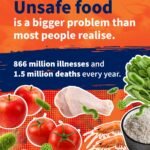
Foodborne diseases are not just a Nigerian problem. According to the World Health Organization (WHO), nearly one in every nine people worldwide falls ill each year after eating contaminated food. That translates to approximately 866 million people annually.
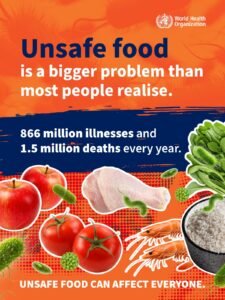
WHO estimates indicate that foodborne illnesses claim approximately 1.52 million lives globally every year.
Children under the age of five bear a disproportionate burden of these illnesses, accounting for nearly one-third of the global health impact caused by unsafe food.
Unsafe food contributes to more than 200 diseases, places enormous pressure on healthcare systems, disrupts livelihoods, and costs the global economy an estimated US$310 billion annually through medical expenses and lost productivity.
Yet despite these staggering figures, food safety remains one of the most overlooked public health issues.
More Than a Stomach Problem
For many people, food poisoning is often dismissed as a temporary stomach upset.
Health experts say that perception can be dangerously misleading.
Foodborne illnesses range from mild diarrhoea and vomiting to severe infections, neurological disorders, kidney complications, cancers, and life-threatening dehydration.
In some cases, victims recover after a few uncomfortable days.
In others, the consequences can be permanent.
And for some families, as in the cases of Mr. Adeayo and the elderly woman from Ogun State, the consequences can be irreversible.
Why Food Safety Matters to Everyone
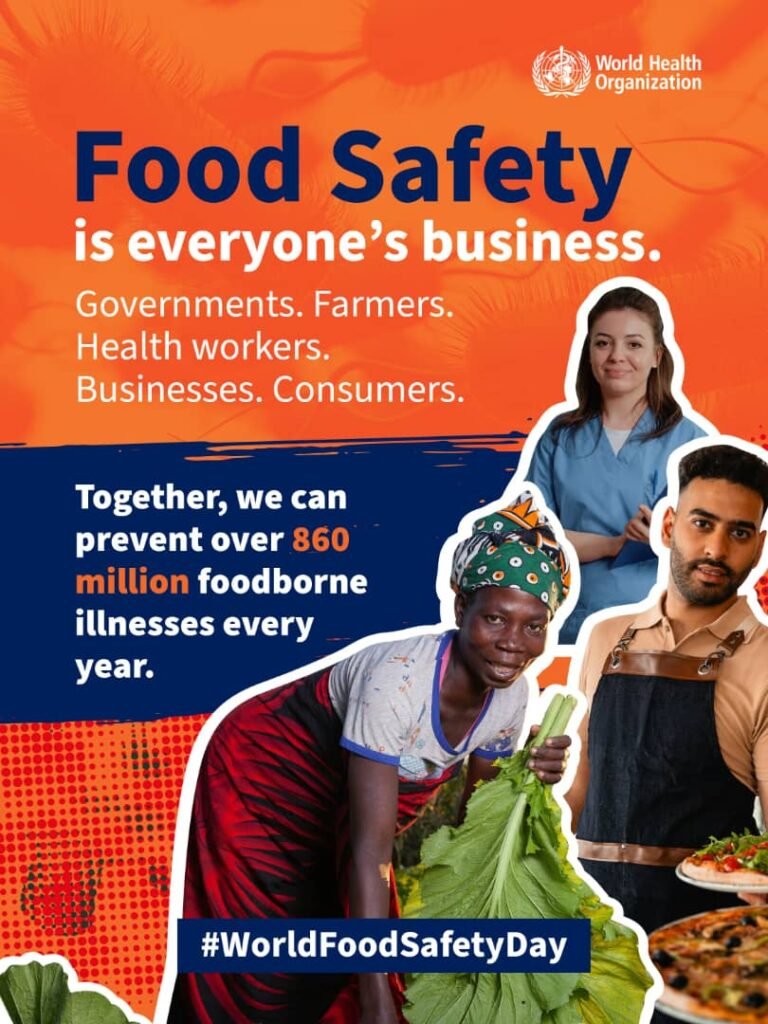
Food safety is often viewed as the responsibility of health authorities, food vendors, restaurants, or government regulators. But experts insist it is everyone’s responsibility.
From the farmer growing vegetables to the trader selling produce in the market, from the restaurant owner preparing meals to the consumer buying food for their family, every link in the chain matters.
A single act of negligence like –
Improper storage, Contaminated water, Poor hygiene, Spoiled ingredients, Unsafe food handling can have devastating consequences.
As the world marks World Food Safety Day, experts are urging greater awareness of what many describe as a preventable public health crisis.
Because food should nourish the body—not endanger it.
NB:
This article is the first in a five-part series examining the hidden dangers of foodborne diseases, the science behind food poisoning, the mistakes people make at home, the responsibilities of food vendors, and the practical steps families can take to protect themselves.
In Part Two, we investigate the invisible threats lurking in food and water—from bacteria and viruses to parasites and toxins—and explain how these microscopic hazards continue to make millions of people sick every year.