


WHY DOES UNSAFE FOOD CAUSE 1.5 MILLION DEATHS EACH YEAR, AND WHY ARE CHILDREN MOST AT RISK
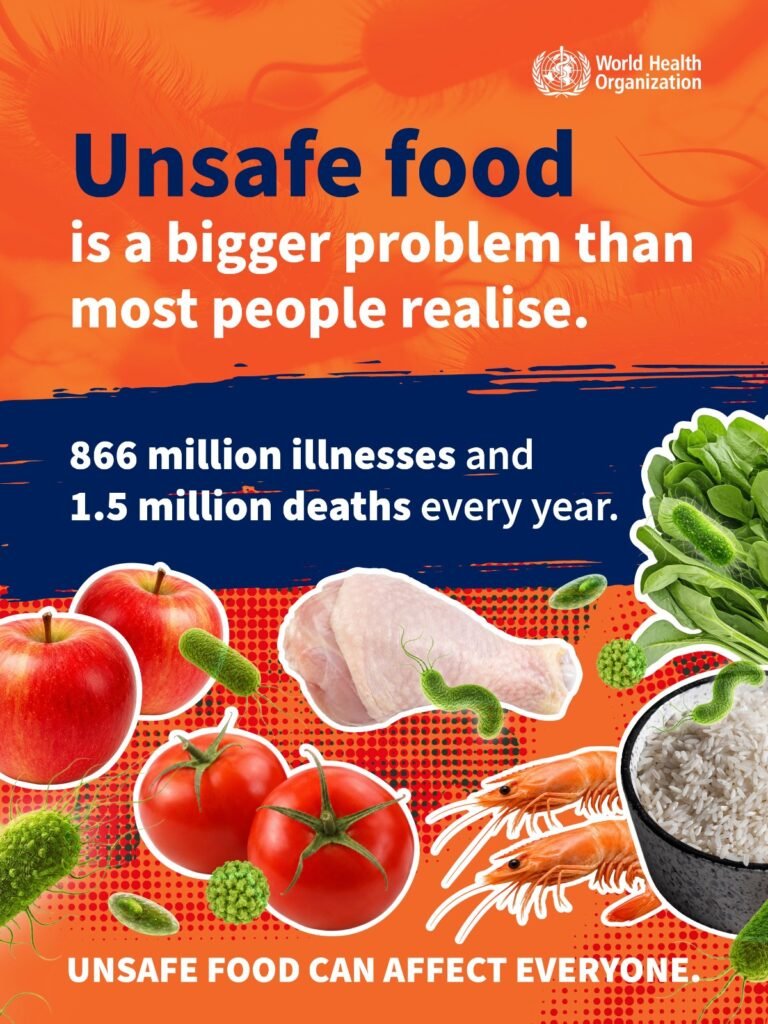
Young children are nearly three times more likely than adults to fall ill from unsafe food, according to new estimates released by the World Health Organization (WHO), which found that contaminated food causes around 866 million illnesses and 1.5 million deaths globally each year.
The findings, published ahead of World Food Safety Day on 7 June, show that children under five account for almost one-third of all foodborne disease cases despite making up only 9% of the world’s population. WHO said many of these illnesses and deaths could be prevented through safer food practices, improved sanitation, access to clean water and stronger healthcare systems.
The agency’s latest assessment also highlights major regional inequalities, with the highest burden concentrated in Africa and South-East Asia. Together, the two regions account for nearly three-quarters of global foodborne illnesses and 60% of deaths linked to contaminated food.
Foodborne bacteria, viruses and parasites remain the leading cause of illness, contributing to an estimated 860 million cases in 2021. However, chemical contamination was responsible for most fatalities. WHO estimates that chemical hazards accounted for 73% of food-related deaths, with inorganic arsenic and lead linked to the majority of these cases through increased risks of cardiovascular disease and cancer.
Children face particularly severe consequences from exposure to toxic substances in food. Chemicals such as lead and methylmercury can damage the developing brain, leading to lifelong neurological and developmental disorders.
”Food safety is not an abstract issue – it touches every meal, every family, every day,” said WHO Director-General Dr Tedros Adhanom Ghebreyesus. He said the new estimates provide countries with clearer evidence of where foodborne disease burdens are highest and where interventions are most urgently needed.
The analysis expands WHO’s previous estimates by examining 42 major foodborne hazards across 194 countries between 2000 and 2021. It includes bacteria, viruses, parasites and chemical contaminants, as well as newly assessed hazards such as rotavirus, toxic metals and Trypanosoma cruzi, the parasite responsible for Chagas disease.
According to WHO, contamination often occurs before food reaches consumers. The organization is calling for stronger agricultural practices, tighter industrial controls and improved environmental regulations to prevent hazardous substances from entering the food supply.
The economic consequences are also substantial. WHO estimates that foodborne diseases resulted in approximately US$310 billion in lost productivity in 2021 due to illness-related absences from work. When adjusted for differences in living costs between countries, the figure rises to US$647 billion.
Experts warn that climate change, environmental degradation and antimicrobial resistance are increasing food safety risks globally. Rising temperatures and changing weather patterns can increase contamination, while drug-resistant infections make foodborne diseases more difficult to treat.
Yuki Minato, a WHO technical officer for food safety and senior author, described the findings as both “a wake-up call” and “a roadmap” for governments. She said countries must strengthen surveillance systems, improve coordination between health, agriculture and environmental sectors, and invest in targeted interventions to reduce preventable illness and death.
WHO acknowledged that the true burden of unsafe food is likely higher than current estimates suggest. The assessment did not include several important hazards due to insufficient data, including antimicrobial-resistant bacteria, pesticide residues and PFAS chemicals, often referred to as “forever chemicals.”
The organization said the new national-level estimates are intended to help governments identify priority risks, allocate resources more effectively and develop evidence-based food safety policies.