


INTERNATIONAL MOTHER LANGUAGE DAY 2026 : LINGUISTS WARN NIGERIA RISKS CULTURAL & LEARNING LOSS BY NEGLECTING MOTHER TONGUE EDUCATION

As Nigeria joins the world to mark International Mother Language Day 2026, education experts have renewed calls for stronger implementation of mother-tongue education, warning that sidelining indigenous languages could harm learning outcomes and accelerate cultural loss.
The annual observance, proclaimed by the United Nations Educational, Scientific and Cultural Organization, highlights the importance of linguistic diversity and multilingual education. This year’s theme, “Youth Voices on Multilingual Education,” emphasises giving learners access to education in languages they understand best.
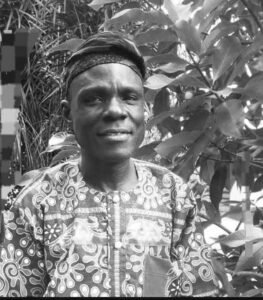
Speaking during an interview session with Jobeth Media, former education administrator and linguist, Mr Earnest Ayerin Oluwafemi, said Nigeria’s education framework already recognises the importance of indigenous languages.
Citing the 2014 National Policy on Education, he noted that the government acknowledges language as a tool for promoting social interaction, national cohesion and cultural preservation. The policy states that every child should learn the language of their immediate environment and at least one of the three major Nigerian languages— Hausa, Igbo or Yoruba.
“A child learns faster and comprehends better when taught in a language that is familiar,” he said. “The mother tongue is the first language a child hears from birth. It forms the foundation of thought and understanding.”
He argued that early education should begin in the mother tongue to strengthen comprehension before transitioning to other languages.
ECHOING BABS FAFUNWA’S ADVOCACY
Mr Oluwafemi referenced late Nigerian educationist Babs Fafunwa, who advocated for teaching even science subjects such as chemistry and physics in indigenous languages for clearer understanding.
According to him, several developed nations have successfully used their local languages as the primary medium of instruction. He cited Japan and China as examples of countries that modernised without abandoning their linguistic heritage.
“They encourage global languages but never jettison their own,” he said, urging Nigeria to develop and standardise major indigenous languages without sentiment.
PARENT WARNS OF CULTURAL EROSION
A retired civil servant and language teacher, Mr Samuel Abosede, also stressed that language preservation goes beyond academics.
“Mother language is the best because it connects children to their background,” he said, warning against describing indigenous languages as “vernacular”— a term he believes diminishes their value.
He recounted how shared language identity once saved a Nigerian abroad, illustrating how language can create bonds and protection even in foreign lands.
Mr Abosede said research indicates that pupils taught in their mother tongue often perform better academically than those taught solely in English. He added that when children learn in their indigenous language at school, parents can reinforce those lessons at home more effectively.
He warned that excluding science students from studying indigenous languages could hasten cultural decline. “If we continue to relegate our languages, future generations may not find anyone left to teach them,” he said.
A GLOBAL CONCERN
According to United Nations, about 40% of learners globally are not taught in a language they fully understand. The agency also estimates that one language disappears every two weeks, taking with it cultural memory and identity.
In Nigeria— a country with more than 500 languages— English remains the dominant language of instruction, despite the widespread use of indigenous languages such as Yoruba, Hausa, Igbo, Ijaw, Kanuri and Efik.

Young professionals, however, are increasingly using digital platforms to create content in local languages, demonstrating how technology can help modernise and preserve linguistic heritage.
A BRIDGE, NOT A BARRIER
As discussions continue across classrooms, policy circles and online spaces, one message stands out on this year’s International Mother Language Day: language is not a barrier to development, but a bridge to inclusion, identity and national progress.
Education stakeholders say the challenge now lies not in recognising the value of indigenous languages— but in translating policy into practice before more voices fall silent.