



EXPERT WARNS OF LANGUAGE LOSS, CAUTIONS POLICYMAKERS AGAINST RELEGATING INDIGENOUS LANGUAGES IN NIGERIA

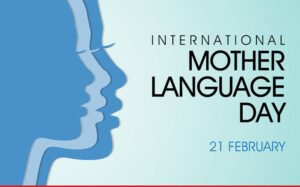
As the world marks International Mother Language Day, proclaimed by the United Nations Educational, Scientific and Cultural Organization (UNESCO), an education expert has warned that Nigeria risks cultural erosion and weakened learning outcomes if policymakers continue to sideline indigenous languages in schools.
Lady Ejiro Umukoro, an education specialist and language advocate, described policies that downplay mother-tongue instruction as “defeatist” and a “disservice” to national development, particularly in a country with over 500 languages.
“When the language of instruction is not your native tongue, you gradually throw away your history, culture and even your grasp of ideas. That is defeatist,” she said.
Nigeria’s linguistic diversity is widely regarded as one of its greatest cultural assets. Yet, according to Umukoro, current education practices that prioritise foreign languages over local ones threaten that heritage.
“Our linguistic diversity is a cultural treasure trove waiting to be tapped,” she noted. “A country with 500 languages is a gold mine. But when policies elevate foreign languages above indigenous ones, that’s how languages begin to disappear.”
She stressed that language is more than communication— it shapes perception, identity and cognitive development. Children, she argued, understand foundational concepts better when first taught in their mother tongue before transitioning to global languages.
Highlighting research-backed evidence, Umukoro explained that multilingual education strengthens memory, enhances problem-solving skills and improves creative thinking.
“When children learn first in their mother tongue, they grasp concepts faster. It also makes it easier to transition into other languages later,” she said.
She pointed to countries like India, where more than 20 officially recognised languages are used in education across regions, allowing learners to conceptualise science and technology in familiar linguistic contexts. This, she said, has supported grassroots innovation and localised problem-solving.
Studies consistently show that multilingual learners often outperform monolingual peers in multitasking and creativity— skills essential in a global knowledge economy.
Umukoro also cited China as an example of a nation that has successfully leveraged indigenous language instruction for development.
“You don’t see China abandoning its language as the medium of instruction,” she said. “They teach science, innovation and technology in their local language, strengthening national identity while accelerating progress.”
She urged Nigeria to adopt a structured multilingual approach— teaching foundational subjects in indigenous languages while gradually introducing globally recognised languages.
“Languages are bridges, not walls. They connect us to our roots and empower disadvantaged communities,” she added.
Umukoro expressed concern that, in an era of artificial intelligence and digital transformation, Nigeria is failing to integrate its languages into technological spaces.
“In the age of AI, where languages are being translated into AI models globally, we are still saying indigenous languages should not be the language of instruction. That is a disservice,” she said.
She argued that promoting indigenous languages in education, media, research and technology would not only preserve cultural heritage but also boost local economies and foster inclusive growth.
As the world reflects on the importance of linguistic diversity, Umukoro called on Nigerian policymakers to rethink language policies that sideline mother-tongue education. She emphasised that promoting indigenous languages can:
- Improve cognitive development and academic performance
- Preserve cultural heritage and national identity
- Strengthen unity through inclusive communication
- Drive grassroots innovation and local economic growth.
“Nigeria must own its narrative,” she said, noting that development becomes more meaningful when people can learn, innovate and create solutions in the language they understand best.