



NIGERIA 2026 BUDGET BREAKDOWN: HEALTH SECTOR RECEIVES LOWEST ALLOCATION AMONG KEY PRIORITIES
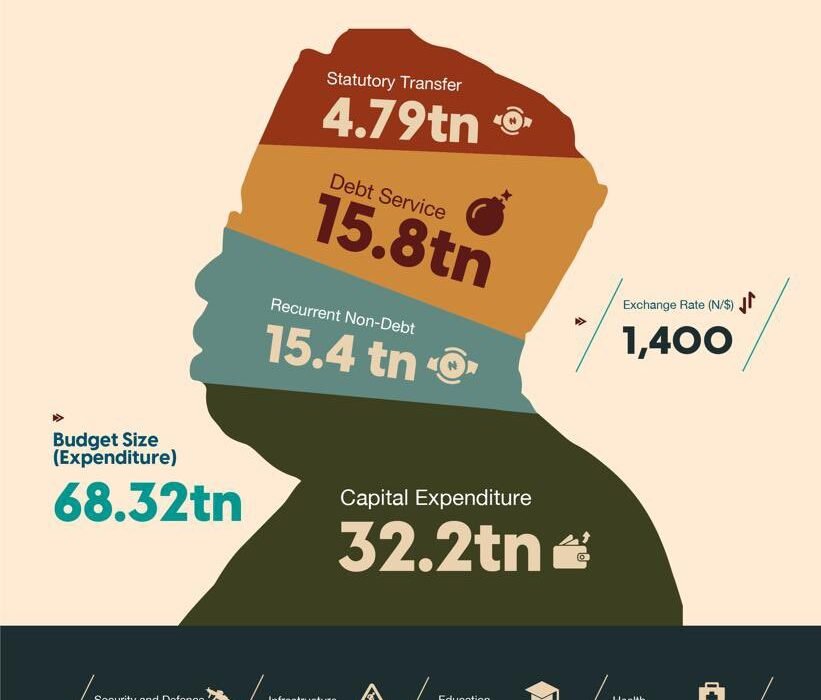
Nigeria’s proposed ₦68.32 trillion 2026 budget has sparked fresh scrutiny, with new analysis revealing that the health sector receives the lowest allocation among major social and economic priorities.
According to the budget breakdown, ₦32.2 trillion—nearly half of the total—is earmarked for capital expenditure, covering critical infrastructure such as roads, schools, and public facilities. However, a closer look at sectoral allocations shows a striking imbalance in funding priorities.
Security leads with ₦5.41 trillion, followed by infrastructure at ₦3.56 trillion and education at ₦3.52 trillion. In contrast, health is allocated just ₦2.48 trillion—the smallest share among these key sectors despite ongoing challenges in Nigeria’s healthcare system.
Other major expenditures include ₦15.8 trillion for debt servicing and ₦15.4 trillion for recurrent non-debt spending, highlighting the significant portion of public funds committed to financial obligations and government operations.
The relatively low allocation to health raises concerns among analysts and citizens, especially as the country continues to grapple with underfunded hospitals, workforce shortages, and access to quality care.
Experts note that while capital expenditure suggests a focus on development, the distribution across sectors may influence long-term human capital outcomes. Health, often seen as a foundational pillar of national productivity, appears to lag behind competing priorities.
With the 2026 fiscal plan now in focus, attention is shifting from allocation to execution—where the real impact on Nigerians’ daily lives will ultimately be determined.